
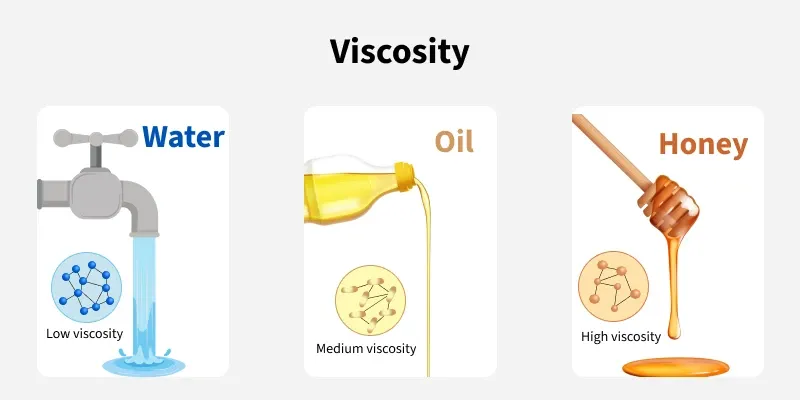
When you hear the term “highly viscous,” what comes to mind? Perhaps thick syrup slowly dripping from a spoon, or motor oil coating engine parts? Understanding what does highly viscous mean opens up a whole world of fascinating science that affects everything from your breakfast table to advanced manufacturing processes.
Breaking Down the Meaning of Viscosity
At its core, viscosity describes how much a fluid resists flowing. When something is described as highly viscous, it means the substance has a thick consistency and flows very slowly. It’s the opposite of “runny” or “watery.”
Imagine trying to run through a swimming pool versus running through air. The water creates much more resistance against your movement—that’s essentially what high viscosity means for fluids at the molecular level.
The Scientific Definition Explained Simply
Scientists define viscosity as the internal friction within a fluid. When we ask what does highly viscous mean from a technical standpoint, we’re talking about fluids where molecules strongly resist sliding past each other.
The key elements include:
- Strong molecular attraction
- High internal friction
- Slow deformation under stress
- Thick physical appearance
- Resistance to pouring or flowing
Real-World Examples You Encounter Daily
Understanding the meaning becomes easier when you see it in action around your home and community:
Kitchen Substances
Your kitchen is full of examples! Thick peanut butter, ketchup, mayonnaise, and cream cheese all demonstrate high viscosity. They don’t splash like water—they hold their shape and move reluctantly.
Personal Care Products
Toothpaste, shampoo, lotion, and hair gel are deliberately formulated to be viscous. This thickness makes them easier to control and apply exactly where you need them.
Automotive Fluids
Motor oil must maintain appropriate viscosity to protect engine components. Too thin, and it won’t lubricate properly; too thick, and it won’t flow through the engine efficiently.
Why Viscosity Matters in Different Industries
The concept of what does highly viscous mean extends far beyond simple observation—it’s critical for countless commercial and industrial applications.
Food Production
Food manufacturers carefully control viscosity to ensure consistent product quality. The perfect chocolate coating needs just the right thickness to adhere properly without running off completely. Similarly, yogurt manufacturers aim for that smooth, creamy consistency that consumers love.
Pharmaceutical Industry
Medicine consistency matters tremendously. Liquid medications need appropriate viscosity for accurate dosing, comfortable swallowing, and proper absorption in the body. Cough syrup, for instance, is deliberately viscous so it coats the throat.
Cosmetics and Beauty
The beauty industry relies heavily on viscosity control. Face creams, foundations, and lip glosses all require specific thickness levels to deliver the desired application experience and effectiveness. Those interested in creative applications across various fields, including product design, might find inspiration at blog arcyart.
Temperature’s Dramatic Effect on Viscosity
One of the most interesting aspects of understanding what does highly viscous mean involves temperature effects:
Heat Makes Things Flow
When you heat most viscous substances, they become less viscous—meaning they flow more easily. This is why cold honey is nearly impossible to pour, but warm honey flows smoothly.
Cold Creates Thickness
Lower temperatures increase viscosity dramatically. This principle explains why you might struggle to start your car on a freezing winter morning—the oil has become much thicker overnight.
Comparing Viscosity Levels
Let’s put different viscosity levels in perspective to better understand what highly viscous truly means:
Low Viscosity Examples
Water, alcohol, and gasoline flow very easily. These substances have minimal internal resistance and spread quickly when spilled.
Medium Viscosity Examples
Milk, vegetable oil, and liquid soap have moderate viscosity. They flow readily but with more resistance than water.
High Viscosity Examples
Honey, glycerin, and corn syrup demonstrate high viscosity. They pour slowly and form thick streams.
Very High Viscosity Examples
Materials like tar, pitch, and certain polymers are so viscous they appear almost solid at room temperature, though they can technically still flow over very long periods.
The Molecular Explanation
What makes one substance more viscous than another? The answer lies in molecular structure and interactions:
Molecular Size
Larger molecules generally create more viscous fluids. Long polymer chains can tangle together, creating significant resistance to flow.
Intermolecular Forces
Substances with strong attractions between molecules—like hydrogen bonding—tend to be more viscous. These forces act like invisible strings holding molecules together.
Shape Matters
The physical shape of molecules influences how easily they slide past each other. Smooth, compact molecules flow more easily than complex, irregular shapes.
Measuring and Describing Viscosity
When professionals need to specify what does highly viscous mean precisely, they use measurement standards:
Viscosity Units
The SI unit for viscosity is the pascal-second (Pa·s). In everyday applications, you might also encounter centipoise (cP), where water at room temperature equals about 1 cP.
Viscosity Grades
Motor oil uses a grading system like 5W-30 or 10W-40. These numbers indicate how viscous the oil is at different temperatures, helping consumers choose the right product for their climate and vehicle.
Practical Applications in Your Life
Understanding viscosity helps you make better decisions daily:
Cooking Success
Knowing how to adjust viscosity improves your cooking. Adding cornstarch thickens sauces, while adding broth thins them. Understanding these principles helps you achieve perfect consistency every time.
Home Maintenance
Choosing the right paint, caulk, or adhesive depends on viscosity. Thicker paints cover better but may show brush marks, while thinner paints spread smoothly but may require multiple coats.
Car Care
Selecting proper motor oil viscosity protects your engine. Following manufacturer recommendations ensures optimal lubrication across all operating conditions.
Special Cases: Non-Newtonian Fluids
Some fascinating substances don’t behave predictably. These non-Newtonian fluids change viscosity based on applied force:
- Ketchup becomes less viscous when you shake or tap the bottle
- Cornstarch mixed with water becomes solid when struck but flows when moved slowly
- Silly Putty bounces like a solid but slowly flows like a liquid
Environmental and Health Considerations
Viscosity affects natural processes and human health in important ways:
Blood Viscosity
Your blood’s viscosity affects circulation and heart health. Proper hydration helps maintain healthy blood viscosity, while dehydration makes blood thicker and harder to pump.
Environmental Impact
Oil spills demonstrate how viscosity affects cleanup efforts. Highly viscous crude oil spreads slowly but adheres stubbornly to surfaces, making cleanup particularly challenging.
Conclusion
So, what does highly viscous mean? It describes substances with thick consistency and strong resistance to flow, caused by molecular friction and intermolecular forces. From the peanut butter you spread on toast to the oil protecting your car’s engine, highly viscous materials play essential roles in daily life.
Understanding this concept helps you appreciate the science behind everyday experiences and make informed choices about products you use. Whether you’re cooking, maintaining your vehicle, or simply observing the world around you, recognizing viscosity and its effects enriches your understanding of how materials behave.
| Viscosity Level | Description | Common Examples | Typical Viscosity Range |
|---|---|---|---|
| Very Low | Flows instantly | Water, alcohol | 0.001-0.01 Pa·s |
| Low | Flows easily | Milk, thin oils | 0.01-0.1 Pa·s |
| Medium | Moderate flow | Vegetable oil, cream | 0.1-1 Pa·s |
| High | Slow, thick flow | Honey, syrup | 1-100 Pa·s |
| Very High | Barely flows | Tar, pitch, polymers | 100+ Pa·s |